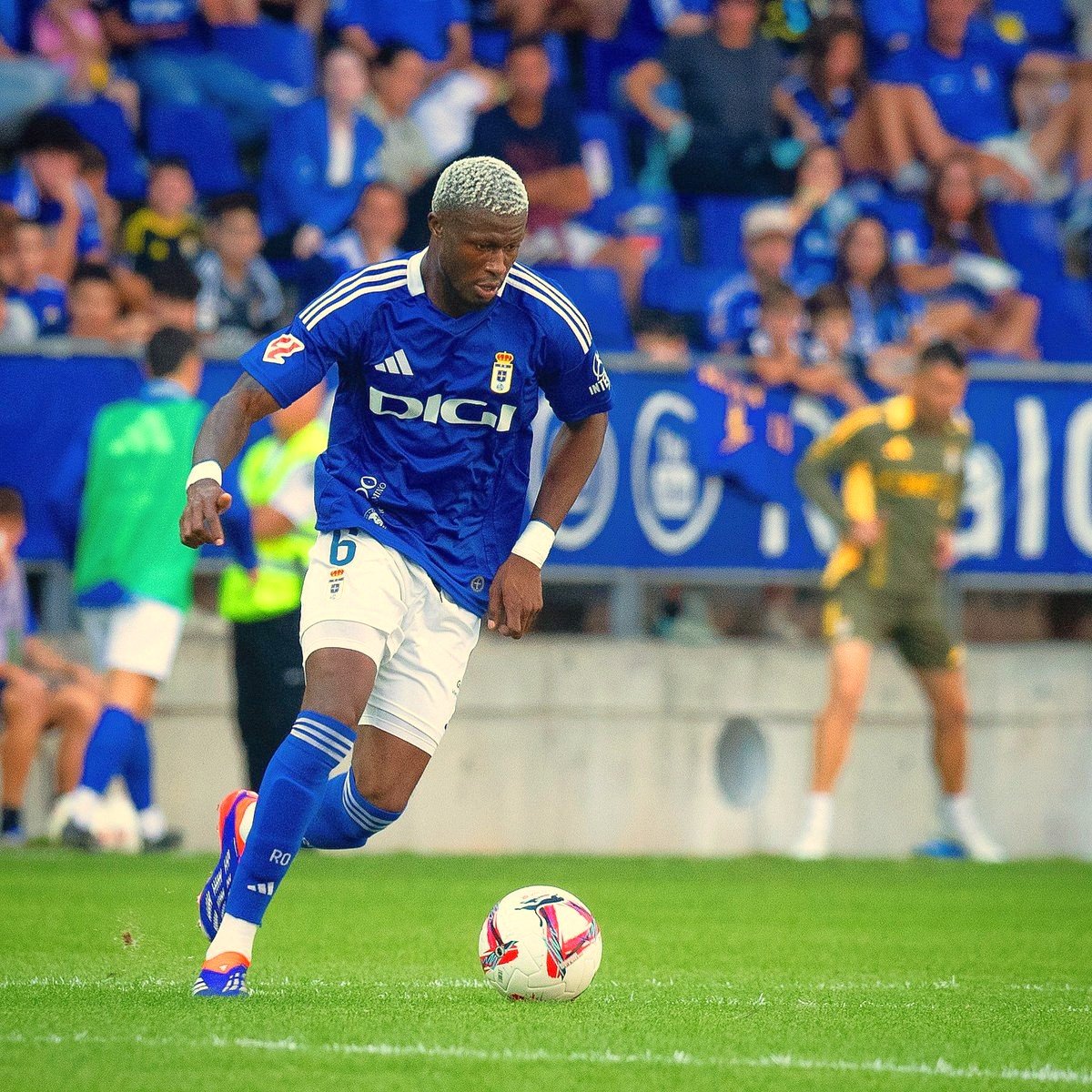
Nobody is writing songs about Kwasi Sibo. The goal belonged to Yirenkyi. The heroics belonged to Asare. The tactical credit, where it exists, will go to Queiroz. Sibo will collect a 6 from the rating sites — the standard mark for a substitute who didn't play long enough to register a meaningful statistical footprint. Adequate. Decent cameo. Move on. The algorithms will note that he registered zero goals, zero assists, and thirteen minutes of playing time. Case closed.
This is wrong. And it matters that it is wrong, because the metric is wrong.
Traditional player rating systems are built around time on the pitch. The longer you play, the more data points you generate, the more confident the rating. A substitute who plays thirteen minutes gets a 6 almost by default — not because he played badly, but because the system doesn't have enough events to rate him higher. Time is the proxy for impact. And that proxy is inadequate.
Consider Roger Milla. At the 1990 World Cup in Italy, Milla came off the bench as a 38-year-old substitute for Cameroon and scored four goals in four matches — including two against Colombia in the round of sixteen that sent Cameroon into the quarterfinals, the first African nation to reach that stage. He danced at the corner flag. The world fell in love. By any traditional rating system built around minutes played and statistical events, Milla would register as an average to good substitute. By the only metric that matters — impact on the outcome — he would be a 9. The same gap exists between what Sibo did against Panama and what the rating sites recorded, a 6. Decent sub.
My argument is simple: impact should be the primary measure, not time. A player who enters in the 77th minute and changes the trajectory of a World Cup match within three minutes has demonstrated something more valuable than a starter who plays eighty minutes at the same level as the opponent. The shorter the time and the bigger the impact, the stronger the case. Thirteen minutes. Panama abandoned their press. Ghana won. That is not a 6. That is the match.
Kwasi Sibo did not score against Panama. He did something more important. He changed the game.
What Was Happening Before He Came On
To understand what Sibo did, you have to understand what Ghana looked like for the 77 minutes before he arrived. Panama pressed aggressively from the first whistle. Their structure was organized: two forwards pressing Ghana's center-backs, a midfield line of three cutting off passing lanes, full-backs tucking in to deny width. Every time Ghana won the ball back, they faced immediate pressure. Every time the goalkeeper received the ball, he had three seconds before Panama's forwards arrived.
Elisha Owusu was the designated midfield anchor for those 77 minutes. He was not equipped for what Panama were doing to him. This was not a failure of talent — Owusu is a capable player at club level. It was a failure of match-up. Panama targeted the space in front of Ghana's back four relentlessly, dragging Owusu into unfavorable positions, forcing him to receive the ball under pressure and make decisions faster than he could process them. The result was the first half we documented at half-time: 171 passes to Panama's 291, zero shots on target, every goalkeeper release immediately pressured into a turnover.
The halftime subs — Thomas-Asante and Fatawu at 57 minutes — helped. They gave Ghana pace and directness going forward, and Panama's defensive structure had to shift to account for them. But the midfield problem persisted. Ghana were still losing the ball quickly in central areas. Panama were still able to press when they chose to. The game was still being played largely on Panama's terms.
Then, in the 77th minute, Queiroz made the call that actually changed everything.
The Thirteen Minutes That Changed the Match
The timing is not coincidental. Panama did not abandon their press because they ran out of energy at the 80th minute by chance. They abandoned it because pressing Ghana suddenly became more expensive than it had been for the previous 77 minutes. The reason it became more expensive was Kwasi Sibo.
What Sibo Actually Did — The Qualities That Don't Appear in Box Scores
There are four things a defensive midfielder can do that transform a match without touching the statistical categories journalists write about. Sibo did all four in his thirteen minutes.
The first is calm ball retention under pressure. When Panama pressed Owusu, he had two options: rush the pass and risk a turnover, or play it back and concede territory. Both options cost Ghana something. When Panama pressed Sibo, he had a third option: hold the ball, shift his body, wait for the press to commit, and then play around it. That one skill — the willingness and ability to receive under pressure and not panic — is what ended Ghana's cycle of turnovers in central areas. Panama's press lost its reward. Pressing became expensive. Panama stopped pressing.
The second is positional discipline in front of the back four. A defensive midfielder's primary responsibility is to be in the right place before the ball arrives, not after it. Owusu spent much of the match reacting to Panama's movements. Sibo was positioned to anticipate them. That positional intelligence — built through years at Real Oviedo against technically disciplined La Liga opponents — is not something you can see in a highlight reel. You see its absence when a team concedes on the counter. You see its presence when a team doesn't.
The third is simple, purposeful forward distribution. Ghana's passing in the first 77 minutes was either rushed under pressure or sideways and backward to avoid pressure. Sibo's distribution was neither. He played forward when there was a forward pass to play. He played sideways when the forward option was not there. He never played the ball into danger. That sounds elementary. It is not. It requires reading the game two steps ahead of the moment, which is exactly what Ghana's midfield had been unable to do all match.
The fourth is tempo control. Football matches have a heartbeat. When a team is panicking, the heartbeat is fast and uneven. Passes happen too quickly. Decisions get rushed. Players run into positions instead of moving into them. Sibo slowed Ghana's heartbeat. Not by playing slowly — he pressed when he needed to press — but by making the team feel that time was available, that the next pass did not need to be perfect, that there was space to breathe. That psychological effect on teammates is invisible to statistics and irreplaceable in a tight match.
By the 80th minute, three minutes after Sibo's introduction, the Guardian's live report noted that Panama had abandoned their press entirely. Ghana, who had been unable to string passes together for 77 minutes, were suddenly "kicking it around with impunity." The match changed. Sibo changed it.
Why Yirenkyi and Semenyo Were Fine — But Not the Difference
This is not a criticism of Caleb Yirenkyi or Antoine Semenyo. Both players had solid matches. Yirenkyi ran disciplined channels after his yellow card, contributed to defensive shape, and finished the winner with the composure of a player who belongs at this level. Semenyo initiated the winning goal sequence and worked hard across 90 minutes without the service his talent deserves.
But neither of them changed the match. Both players performed at roughly the same level in the first half as they did in the second. The missing passes that created turnovers in the first half continued into the second. The individual moments of quality were there throughout — Semenyo's occasional flickers of pace, Yirenkyi's forward runs — but they were isolated. Disconnected from a coherent midfield structure.
That is the point. Sibo did not make Semenyo faster or give Yirenkyi better technique. What he did was connect them to a functional midfield for the first time in the match. When the center of the pitch is controlled, wide players get better angles, strikers get the ball in better positions, and defenders get more time. The attacking players looked more dangerous after Sibo came on not because they improved individually, but because the platform beneath them finally held.
Ghana fans will remember Yirenkyi's goal. They should also remember who made it structurally possible.
Who Kwasi Sibo Actually Is
Kwasi Sibo was born on June 24, 1998, in Wa, in Ghana's Upper West Region. He began at Cheetah FC, signed for Watford in 2018 as a teenager, and spent years finding his footing in European football through loans to Ibiza in Spain and Skënderbeu in Albania. He joined Real Betis B, then Amorebieta in the Spanish second division, before Real Oviedo signed him in 2024.
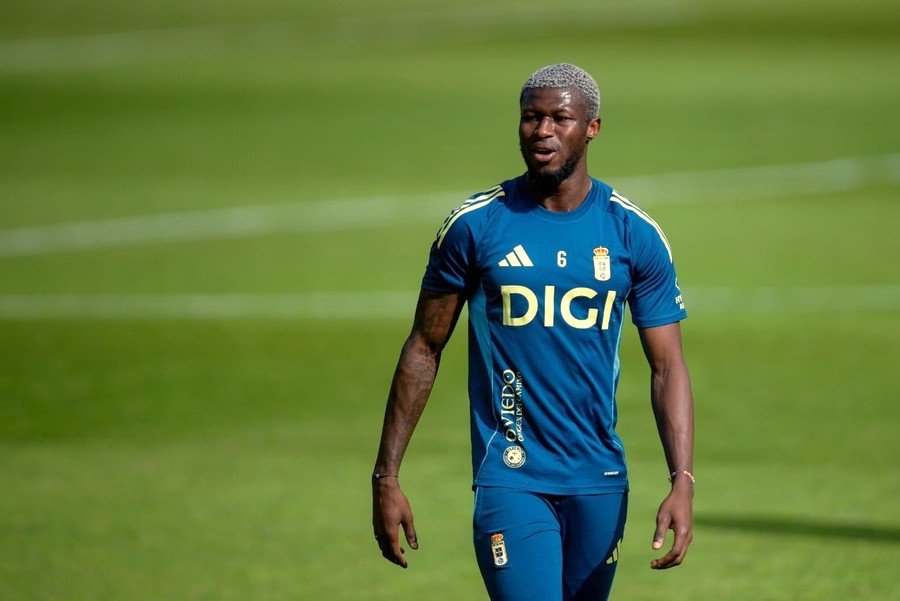
At Oviedo, he became indispensable. He played 26 matches in the 2025-26 La Liga season, starting 21 of them, accumulating 1,686 minutes. Oviedo, a club that had spent years outside the top flight, competed in La Liga with Sibo as the disciplined heartbeat of their midfield. He earned his first Black Stars call-up in September 2025 for a World Cup qualifier against Mali — a late draft called because Partey was ill, Owusu was suspended, and Sulemana was injured. He walked into the starting eleven and performed. The technical staff described his inclusion as being about balance, discipline, and tactical sense.
He is now effectively a free agent. His contract at Real Oviedo expires June 30, 2026 — in ten days — and the club have confirmed they will not be extending it. Saudi clubs are reportedly circling, with a free transfer move expected to be decided shortly after the World Cup. The timing is significant: Sibo will be playing the most important matches of his career for Ghana while simultaneously negotiating his next club contract.
Ghana's football establishment should be paying close attention to where Sibo goes next. A move to the Saudi Pro League, while financially attractive, could mean less technically demanding football and a slower development curve at precisely the moment Sibo is entering his prime years. After a World Cup performance that will raise his profile significantly, the hope is that European clubs — in La Liga, the Bundesliga, or the Premier League — take notice before Saudi money closes the door.
The Case for Starting Sibo Against England
Against Panama, Ghana conceded midfield control for 77 minutes before Sibo arrived and changed the match in three. Against England, conceding midfield for 77 minutes is not a strategy. It is a surrender.
England's midfield — Bellingham, Rice, and whichever third option Tuchel selects — is among the best in the tournament. Declan Rice alone covers more ground and wins more duels than any midfielder Ghana has other than, arguably, the absent Partey. If Ghana try to absorb English pressure for 77 minutes with Owusu as the anchor and hope to steal something late, they will not get the chance. England's quality is too high and their patience too deep for that approach to succeed.
Queiroz knows this. He has faced England's type of midfield before — technically disciplined, high-intensity, relentless in transition. He knows that you cannot press-resist England without a midfielder who can receive under pressure, retain the ball in tight spaces, and play forward quickly when the moment arrives. That profile belongs to Sibo, not Owusu. And Tuchel — who built his reputation at Dortmund, PSG, Chelsea, and Bayern Munich on precisely this kind of midfield dominance — will have his own plans to stop Ghana doing what they did in the final thirteen minutes against Panama.
Thirteen minutes against Panama is a small sample. But the evidence from those thirteen minutes — the Guardian's real-time observation, the match flow shift, the abandonment of Panama's press within three minutes of Sibo's arrival — points in a clear direction. Start him in Boston. Give him the full ninety minutes against the midfield that will test him most. Find out what Ghana's future midfield general can do when he is not coming on to rescue a match but to control one from the beginning.
Ghana beat Panama 1-0. The scorers were Yirenkyi. The hero was Asare. The man of the match, by the evidence available, was Sibo — who registered no goal, no assist, and thirteen minutes of playing time, and changed the match anyway.
The aggregator websites gave him a 6. That number measures what he contributed statistically in thirteen minutes. It does not measure what he contributed structurally — the calm retention, the positional discipline, the forward distribution, the tempo control that ended Panama's press and opened the corridor through which Yirenkyi's winner eventually arrived. By a time-based metric, Sibo is a decent sub. By an impact-based metric — the one that actually reflects what happened on the pitch — he is the reason Ghana won. Roger Milla scored four goals from the bench at Italia '90 and the traditional metrics still called him a substitute. History called him the story of the tournament. The shorter the time and the bigger the impact, the stronger the case. Sibo's thirteen minutes deserve the same honest accounting.
Ghana football fans tend to focus on who scored rather than who made scoring possible. That tendency is understandable and human. But it produces a blind spot — one that will cause the best performance against England to go uncelebrated if it comes from the number six holding the midfield rather than the number nine putting the ball in the net.
Kwasi Sibo, 27, from Wa, Ghana. Central midfield. Real Oviedo. Thirteen minutes. That was enough to change a World Cup match. Start him in Boston and find out what ninety minutes looks like.
Sources: Guardian live match report, Ghana vs Panama, June 17, 2026 (press abandonment observation, 80th minute); Reuters match report on Panama possession dominance; Wikipedia career profile of Kwasi Sibo; GhanaSoccernet profile and reporting on Sibo's national team debut (September 2025) and Real Oviedo contract expiry; La Liga official statistics (26 appearances, 1,686 minutes, 2025-26 season); Transfermarkt player valuation and career history; AfricaSoccer.com technical staff quote on Sibo's qualities; SportsWorldGhana biography; Opta Analyst match data, Ghana vs Panama, June 17, 2026.