The Ritual Sacrifice: How Ghana Guarantees World Cup Failure
Seventy-two days before kickoff, Ghana fired Otto Addo after a 5-1 loss to Austria. This is not panic. This is tradition.
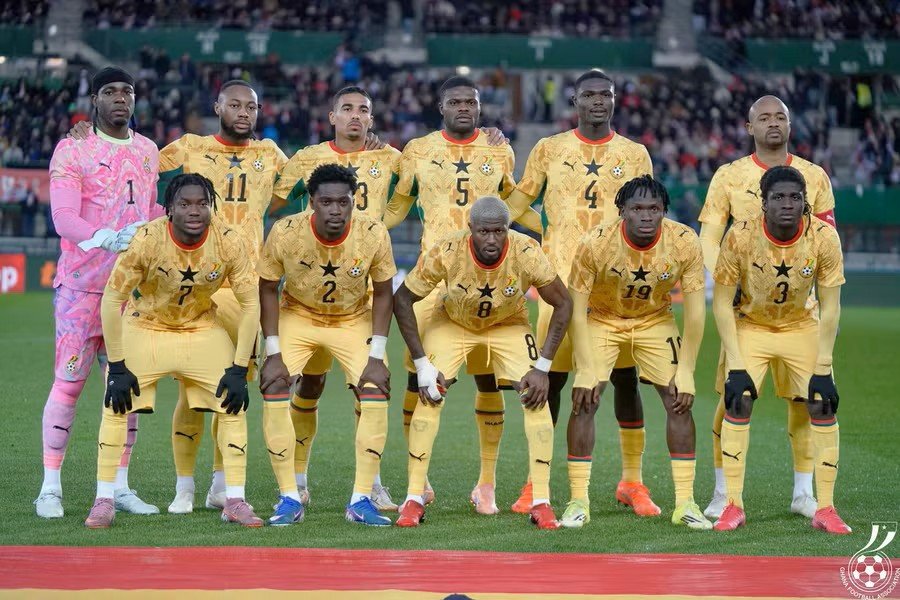
On March 31, 2026, at 2:37 AM Accra time, the Ghana Football Association issued a terse statement: Otto Addo was out as Black Stars head coach, effective immediately. The team would face Panama in 72 days. Then England. Then Croatia. The man who qualified Ghana for back-to-back World Cups—the first Ghanaian coach to achieve this—was gone. No replacement named. No plan announced. Just a statement thanking him for his contribution and wishing him luck.
The timing was not an accident. It was predictable.
Ghana has a pattern when it comes to major tournaments: wait until the last possible moment—when building chemistry is nearly impossible, when implementing tactics is a race against the calendar, when any incoming coach inherits not a prepared team but a compressed timeline—and then make the change. You can call it panic. You can call it decisiveness. What you can't call it is effective preparation.
The Numbers Don't Lie
Otto Addo's crime? A 5-1 thrashing by Austria in Vienna on March 27, followed by a 2-1 loss to Germany three days later. Four consecutive friendly defeats. A 36.4% win rate across his second stint. Failure to qualify for AFCON 2025—Ghana's first absence in 21 years.
The Austrian loss was Ghana's heaviest defeat in nearly two decades. The performance was abysmal. No defensive structure. No midfield cohesion. Players deployed out of position. It looked exactly like what it was: a team without a plan.
But here's the problem: firing the coach 72 days before the World Cup doesn't fix any of that. It guarantees it continues.
Any incoming coach will inherit a squad he didn't select, a tactical system he didn't build, and a chemistry he has no time to develop. Ghana has scheduled exactly one more friendly before the World Cup—against Wales. One match to implement a philosophy, drill set pieces, and establish patterns of play that usually take months.
The Pattern Is the Problem
This is not the first time. Ghana has been here before, multiple times, always with the same result: group stage exit or worse.
Kwesi Appiah led Ghana to qualify for the 2014 World Cup in Brazil. He was sacked before the tournament. His replacement, Avram Grant, inherited the squad cold and Ghana exited in the group stage amid player bonus disputes and internal chaos.
Milovan Rajevac delivered Ghana's greatest World Cup performance in 2010—quarterfinals, one Luis Suárez handball away from the semifinals. Ghana failed to qualify for AFCON 2012. Rajevac was gone. The institutional knowledge went with him.
When Rajevac returned in 2021, he was brought back to "fix" the Black Stars. Within months, Ghana crashed out of AFCON 2021 in the group stage for the first time since 2006, losing to debutants Comoros. Rajevac was sacked again.
Chris Hughton replaced him. Hughton lasted through a poor AFCON 2023 showing and was dismissed. Otto Addo took over—for the second time. Now Addo is out, 72 days before Ghana faces Panama in Toronto.
The coaches change. The pattern doesn't. Hire after qualification. Sack before the tournament. Repeat.
What Ghana Should Have Done
If the GFA believed Otto Addo was the wrong man, they should have fired him immediately after Ghana failed to qualify for AFCON 2025 in November. That was the inflection point. That was when it became clear the project wasn't working. Firing him then would have given a replacement six months to prepare. Six months to assess the squad. Six months to implement a system. Six months to build the cohesion required to compete against England, Croatia, and Panama.
Instead, the GFA waited. They let Addo take Ghana through World Cup qualifying. They let him schedule friendlies against Austria and Germany—tests designed to expose weaknesses before the tournament. When those tests revealed exactly what everyone already knew—that Ghana lacked tactical identity and defensive structure—they panicked.
A former Ghana coach told Ghanaian media: "The decision to part ways with Otto Addo, in my view, has come a bit late. If a change was necessary, it should have happened immediately after the failure to qualify for the 2025 AFCON. Now, with just over two months to the World Cup, I have serious concerns about what lies ahead."
He's right. The decision came too late to help and just in time to hurt.
The Coaching Carousel Spins Again
As of this writing, Ghana has no head coach. The GFA president, Kurt Okraku, promised a replacement within two weeks. Over 600 applications have been received. High-profile names like Hervé Renard, Walid Regragui, and Joachim Löw have been floated and quickly ruled themselves out or denied contact. Paulo Bento and Carlos Queiroz are reportedly the frontrunners. Fernando Santos is mentioned.
But here's the reality: no elite coach with options will take this job. The timeline is impossible. The expectations are delusional. The institutional dysfunction is legendary. What serious manager walks into a situation where he has 72 days to prepare a team for a World Cup group containing England (ranked 5th in the world) and Croatia (2018 finalists, 2022 semifinalists)?
Ghana will likely settle for Kwesi Appiah—again. Appiah is Ghanaian, knows the culture, has managed the Black Stars twice before (2012-2014, 2017-2019), and is currently coaching Sudan. He's available, familiar, and cheap. The GFA is reportedly leaning toward a short-term appointment—someone to manage the World Cup, then reassess. That tells you everything. They're not hiring for success. They're hiring for damage control.
Appiah's Sudan had knocked Ghana out of AFCON 2025 qualifying. They took four points off the Black Stars—a 0-0 draw in Accra and a 2-0 win in Benghazi. Ghana finished bottom of the group. Sudan qualified. Now Ghana wants to hire the man who had exposed their weaknesses to fix those weaknesses in 72 days.
The Structural Problem No Coach Can Fix
Firing Otto Addo doesn't address the actual problems. The Black Stars lack:
A clear tactical identity. Addo admitted he didn't rely on a fixed system, preferring to adapt based on opponents. That flexibility became incoherence. Players didn't know their roles. The team looked different every match. Elite international teams—Spain, Germany, France—impose their philosophy regardless of opponent. Ghana reacts.
Defensive structure. The fullback positions remained weak throughout Addo's tenure. Players were deployed out of position. Improvisation replaced planning. Austria exploited this ruthlessly.
Institutional continuity. Ghana has cycled through 33 head coaches since 1957. Successful football nations build around long-term projects. Joachim Löw managed Germany for 15 years. Didier Deschamps has been with France since 2012. Croatia's Zlatko Dalić has been in charge since 2017 and led them to a final and a semifinal. Ghana's longest-serving modern coach lasted four years. Most don't make it past two.
A functional federation. The GFA operates reactively, not strategically. They hire coaches after qualifying, fire them before tournaments, and repeat the cycle without learning. This isn't incompetence. It's a system that prioritizes avoiding blame over achieving success.
No coach can fix these problems in 72 days. Not Appiah. Not Renard. Not Guardiola if he were willing to take the job.
What Happens Next
Ghana will hire someone. That person will have one friendly match to prepare. The squad will travel to Toronto and face Panama on June 17. Panama is beatable—Ghana should get a result. Then comes England in Foxborough on June 23. England, managed by Thomas Tuchel and built around Harry Kane and Jude Bellingham, will be favorites. The final group match against Croatia in Philadelphia on June 27 will likely determine whether Ghana advances.
Can Ghana make it out of the group? Possibly. The talent is there. Kudus, Semenyo, and Williams can hurt any defense. On their day, the Black Stars can beat anyone. But tournament football isn't about talent on paper. It's about preparation, cohesion, and tactical execution under pressure—precisely the things a 72-day coaching change undermines.
History suggests this won't end well. But football has surprised us before.
The Lesson Ghana Keeps Learning the Hard Way
In December 2025, I wrote that Ghana's World Cup window was closing. That the Black Stars had the talent but lacked the system, the continuity, and the strategic patience to turn talent into tournament success. Six months later, the GFA made a decision that validated the concern—not by ignoring the warning, but by making preparation exponentially harder.
Football is religion in Ghana. The Black Stars matter. When they succeed, it's national celebration. When they fail, it's national trauma. This tournament could go either way. Ghana has enough talent to shock people. Kudus can dismantle defenses. Semenyo can change games. The squad that beat South Korea at the last World Cup is largely still available.
But Otto Addo should have been fired in November 2024, the moment Ghana failed to qualify for AFCON. That would have been accountability with a timeline for correction. Firing him 72 days before the World Cup is accountability that arrives too late to help and just in time to create new problems.
Ivory Coast fired their coach mid-tournament at AFCON 2024 and still won—proving that chaos doesn't always mean failure. But Ivory Coast had home advantage, momentum, and luck. Ghana has talent and a punishing group. Whether talent alone is enough, we'll know by June 27 in Philadelphia.
Ghana's chances of advancing past the group stage have been significantly compromised—not by the talent on the pitch, but by the timing of institutional decisions off it.
Firing Otto Addo 72 days before the tournament creates conditions where success becomes exponentially harder. The next coach inherits a squad with minimal preparation time, no opportunity to build chemistry, and limited tactical runway. These are solvable problems given six months. They're nearly insurmountable given ten weeks.
The Black Stars could still surprise us. Football produces miracles regularly. But this decision stacked the odds against them in ways that were entirely avoidable.
When Ghana struggles in Toronto, Boston (Foxborough), or Philadelphia, the question won't be whether the players tried hard enough. It will be whether the federation gave them a fair chance to succeed. The evidence suggests they didn't.
Sources
- Ghana Football Association official statement, March 31, 2026
- ESPN: World Cup-bound Ghana fire coach Otto Addo after 4 straight losses
- Flashscore: Ghana part ways with coach Otto Addo ahead of 2026 World Cup
- YEN.com.gh: Why Otto Addo Was Sacked: 3 Reasons Behind Ghana's Brutal Decision
- Graphic Online: GFA boss explains why Otto Addo was sacked
- GHANAsoccernet: GFA sack Otto Addo after Germany defeat