It had no right to end that way. Ghana were outplayed for 45 minutes, lost their goalkeeper to injury at half-time, and spent most of the second half hanging on by their fingernails while Panama pushed for a goal that their first-half dominance deserved. Then Caleb Yirenkyi — the same man booked in the first half — drove forward in the 95th minute and scored the goal that sent Toronto into chaos.
This is what Ghana football does to you. It makes you furious and delirious within the same 90 minutes. The first half was everything wrong with the Black Stars. The second half, particularly the final 35 minutes, was everything right. And in between, Carlos Queiroz made the adjustments that changed the match — substitutions so precisely timed they deserve to be studied, not just praised.
I wrote before this tournament that the Ghana Black Stars are a conundrum. On any given day, they can produce moments of brilliance and look capable of beating almost anyone. On another day, they can be equally capable of a spectacular disappointment. The biggest issue has never been talent — Ghana consistently produces gifted footballers who compete at the highest levels of the game. The challenge has always been organization: building a coherent team, a stable system, and a long-term vision capable of transforming individual talent into a potent collective force.
Tonight was both halves of that argument played out in real time. Forty-five minutes of the conundrum at its worst. Forty-five minutes of what Ghana can be when the structure is right. And a manager, two months into the job, who understood which levers to pull and when.
45 Minutes to Forget
I covered this in the half-time dispatch. Panama won 64% of possession, completed 291 passes to Ghana's 171, and registered three shots on target to Ghana's zero. Lawrence Ati-Zigi made two crucial saves and then took a knock in a collision that would force him off at the interval. Jordan Ayew tried to do too much individually. The bad passes were systemic. The goalkeeper's every release turned into a Panama possession.
Elisha Owusu was simply overwhelmed in midfield. That is not a criticism of the player — he was being asked to do Partey's job without Partey's read of the game. Panama targeted that space relentlessly and Owusu had no answer. The shape was wrong. The structure was wrong. The first half was a problem that needed solving at half-time.
Queiroz solved it.
Queiroz's Masterclass in the Dressing Room
A manager with five World Cups earns his money in moments like this. Before the second half even began, Queiroz had already made two changes forced by circumstance and two more by choice — and every single one of them was correct.
The forced change: Ati-Zigi could not continue. Benjamin Asare came on. Most managers would treat this as a crisis. Queiroz treated it as an opportunity to reset the entire structure. The goalkeeper change gave him cover to reshape the whole team without drawing attention to the tactical overhaul.
The first tactical shift came at 57 minutes. Abdul Fatawu and Brandon Thomas-Asante replaced Ernest Nuamah and Kamaldeen Sulemana. Both arrivals injected pace and directness that Ghana had been missing. Thomas-Asante caused problems immediately with his physicality, holding the ball up under pressure and winning fouls in dangerous areas. Fatawu's pace down the right gave Ghana a genuine wide threat for the first time in the match. The team began to breathe. Panama's dominance started to loosen.
But the decisive intervention came twenty minutes later. At 77 minutes, Owusu off, Kwasi Sibo on. The midfield had been the problem all night — passive in the first half, marginally better after the attacking subs, but still lacking a composed organizer to set the tempo. Sibo provided exactly that. Within minutes his passing was clean, his positioning intelligent, his ability to receive under pressure and play forward quickly giving Ghana an outlet they had not had all match. The bad passes stopped. The turnovers slowed. Control arrived.
Then, when Ayew's hero ball tendencies started to manifest — holding too long, trying to beat one man too many, slowing attacks that needed to be quick — Queiroz took him off. The attack immediately became more direct and more dangerous without him. The substitution was not a criticism of Ayew's effort. It was a clinical reading of what the game needed in the final twenty minutes.
Queiroz to ITV after the match: "First we had to suffer, we battled like warriors. We won the game with the brains. First half was to suffer against a great team. They know how to play, they know how to do things. We knew that they would control the game but step-by-step this was our strategy to let them come and start to make control until we scored because this is the way to win."
Yirenkyi, 90+5' — Three Men, One Moment
It came in the fifth minute of six added stoppage minutes and it was worth the wait. Semenyo played the pass to Fatawu. Fatawu picked out Thomas-Asante. Thomas-Asante skipped down the left wing, avoided a sliding challenge from José Córdoba, and sent in a low cross that was begging to be converted. Yirenkyi arrived at close range and fired it into an unguarded net — not the cleanest of contacts, the ball coming off his heel — but it went in, and that is all that mattered.
Panama pushed Orlando Mosquera forward for a last-gasp corner. The goalkeeper met it with his head. It caused an almighty scramble in the penalty area. Asare dived on it amid pushing and shoving. The whistle blew. BMO Field erupted.
Queiroz ran onto the pitch. Four-time African champions Ghana had stolen it at the death.
The records tumbled quietly behind the celebration. At 20 years and 153 days, Yirenkyi became the second-youngest player to score for Ghana at a World Cup, behind only Draman Haminu who netted against the USA in 2006 at 20 years and 82 days. More significantly, his goal at 94 minutes and four seconds is Ghana's latest ever goal at a World Cup, surpassing Asamoah Gyan's famous strike against the United States in June 2010 at 92 minutes and 38 seconds. Ghana have been scoring late goals at World Cups for sixteen years. Yirenkyi just wrote the latest chapter.
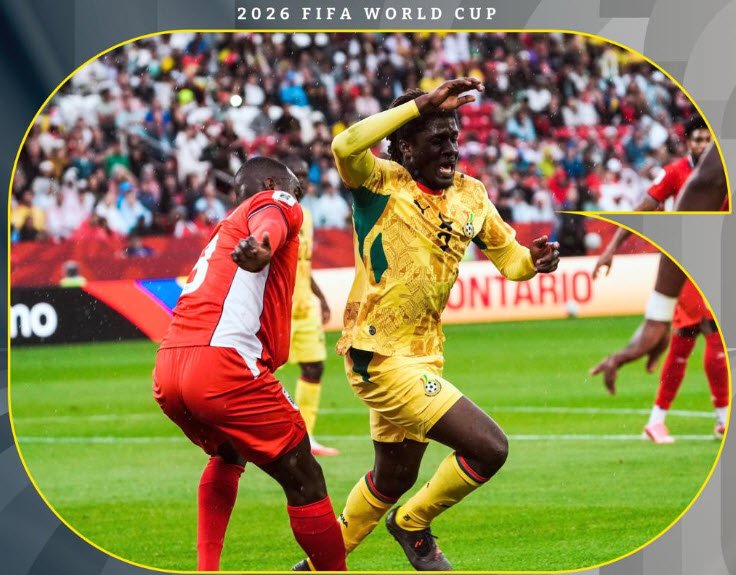
Kwasi Sibo: Ghana's New Midfield Anchor
I want to dwell on this because it may be the most important football story to come out of tonight's match. Kwasi Sibo came on in the second half into a match Ghana were losing on every statistical measure. He left the pitch having transformed the midfield so completely that the team looked like a different side.
Kwasi Sibo came on in the 77th minute into a match that was still 0-0 and threatening to stay that way. Within minutes he had changed the texture of Ghana's midfield completely. His passing was clean. His positioning was intelligent. His ability to receive under pressure and play forward quickly gave Ghana an outlet they had lacked all night. The bad passes slowed. The team started to breathe. The momentum shifted — and it was Sibo's composure in the middle that held it in place long enough for Yirenkyi to strike.
It is too early to crown a successor to Partey. But it is not too early to say that Sibo made a statement tonight that Ghana's coaches, selectors, and fans will be thinking about for the next two matches and beyond.
Ghana — Full Match Grades
⭐ Man of the Match — Kwasi Sibo. Came on in the 77th minute, changed the match in under ten minutes. Clean passing, intelligent positioning, composure under pressure. The most important performance of the night.
| Player | Grade | Assessment |
|---|---|---|
| Lawrence Ati-ZigiGK · Injured HT | 7.5 | Two crucial saves kept Ghana level at half-time. Distribution was poor under Panama's press but his shot-stopping was the reason Ghana were still in the match. Cruel to lose him to injury. |
| Benjamin AsareGK · HT replacement | 8.0 | Historic. First goalkeeper from the Ghana Premier League to represent the Black Stars at a FIFA World Cup. First senior call-up at 32. Three saves in the second half, two from inside the penalty area. Commanded his box, organised his defence, gathered the 97th-minute header that sealed the win. Hearts of Oak's captain. The Ghana Premier League's finest moment at a World Cup. The grade would be higher if not for the fact that Ati-Zigi's injury handed him the opportunity — but what he did with it was exceptional. |
| Caleb YirenkyiMF · Goal 90+5' | 7.5 | Booked in the first half, decisive in the last. Ran a disciplined second half after the yellow card scare and arrived at exactly the right moment in stoppage time. Not the cleanest of finishes — the ball came off his heel — but it went in. Ghana's latest ever World Cup goal. Second-youngest scorer in Ghana's World Cup history. That is all that will be remembered. |
| Kwasi SiboMF · 77' sub for Owusu | 8.5 | Man of the match. Came on in the second half and transformed the midfield within ten minutes. Clean passing, intelligent positioning, composure under pressure. Partey-level control. The most important performance of the night. |
| Brandon Thomas-AsanteFW · 57' sub | 7.0 | Physical, direct, and a genuine nuisance for Panama's defense from the moment he came on. Held the ball well under pressure, won important fouls, and delivered the assist for the winner — surging down the left and squaring to Yirenkyi. The decisive contribution of the second half. |
| Antoine SemenyoRW · Full match | 6.0 | Largely anonymous in the first half with almost no service. Had a hand in a disallowed chance late on — took too long with a pass that allowed Panama's defense to recover and put Thomas-Asante under pressure, resulting in an offside flag. However, he initiated the winning goal move, playing the ball to Fatawu in the sequence that ended with Yirenkyi's finish. A mixed night that ended on the right side. |
| Jordan AyewCF · Replaced by Prince Adu | 5.0 | The hero ball tendency was a recurring problem. Held the ball too long, tried to beat one man too many, slowed attacks that needed to be quick. Queiroz replaced him with Prince Adu well before the final whistle — the right call. He was not on the pitch when Yirenkyi scored. A frustrating night on the ball. But one historic footnote: Ayew became the fourth player to represent Ghana at three different World Cup tournaments, joining Asamoah Gyan, Sulley Muntari, and his brother André Ayew. At 34 years and 185 days, he is also now the oldest player ever to feature for Ghana at a World Cup. Ayew has served Ghana with distinction, but perhaps the time has come for him to make way for younger players who can carry the team into its next chapter. The grade reflects the performance. History will remember the milestone. |
| Elisha OwusuMF · HT sub off | 3.5 | Overwhelmed from the first whistle. Panama targeted him relentlessly and found the gap every time. This is not a verdict on Owusu's quality — it is a verdict on the impossible task of replacing Partey without the system built to support him. He was set up to struggle. |
| Jonas AdjeteyCB | 6.5 | Quietly commanding alongside Opoku. Won his aerial duels, read Panama's runs well, and was actually Ghana's first player to register a shot on target — a header from a corner that threatened the Panama goal. Rarely troubled in the second half. Solid World Cup debut. |
| Marvin SenayaRB | 6.0 | Defensively sound on the right, did not get forward enough to offer an attacking outlet. Kept his shape and helped absorb Panama's pressure in the first half without being exposed. Unspectacular but reliable. |
| Gideon MensahLB | 6.0 | Caught out of position several times in the first half by Rodríguez. Improved in the second half as the midfield provided better cover. Solid enough without being commanding. |
| Jerome OpokuCB · Took a knock | 6.5 | Composed in the air, led the defensive line well in the second half. Took a knock but played through it. One of Ghana's more reliable performers across both halves. |
Ghana had no right to win this match on the basis of the first 45 minutes. Panama were better organized, more direct, and more dangerous. But football is not played in 45-minute segments, and a manager who has stood in five World Cup dressing rooms at half-time knows that.
Queiroz's substitutions were masterful. Sibo for Owusu changed the match. Fatawu and Thomas-Asante changed the attack. Removing Ayew when his hero ball instincts threatened to cost Ghana the game was the final correct call. Every decision after half-time was the right one. That is not luck. That is experience.
Before kick-off, I predicted Ghana 1-0. The scoreline was right. The manner was not what I envisaged — I did not see a dismal first half, a goalkeeper substituted through injury, or a goal in the 95th minute coming. But the arithmetic held.
Ghana 1–0 Panama. Three points. England next in Boston. The arithmetic is alive. And as the BBC put it at the final whistle — that could be the biggest goal in a generation for Ghana and Ghanaian football.
Full Time · June 17, 2026 · BMO Field, Toronto