On Monday, April 27, 2026, unknown gunmen opened fire on a Ghana Armed Forces convoy transporting 140 civilians along the Bawku-Bolgatanga route. The military responded, killing seven assailants. Three civilians died in the crossfire. Ten suspects were arrested. A G3 automatic rifle, two filled magazines, and 176 rounds of ammunition were recovered.
This is not news in Bawku. This is a Monday.
The convoy attack came less than three months after President John Dramani Mahama received the mediation report from Otumfuo Osei Tutu II, the Asantehene, who spent months trying to resolve the Bawku chieftaincy dispute. In February 2026, Mahama revealed what the mediation process had cost: 119 lives. One hundred nineteen people killed while a prominent traditional authority worked to broker peace.
That is not a peace process. That is a body count with a diplomatic cover.
The Conflict That Will Not End
The Bawku conflict is a seventy-year ethnic and chieftaincy dispute between the Kusasi, who claim to be the indigenous landholders of the area, and the Mamprusi, who trace their authority to the Mamprugu kingdom and argue they have historical precedence over the Bawku chieftaincy, known locally as the Bawku skin.
The Kusasi are the majority population in Bawku. The Mamprusi are a small minority, descendants of migrants from Nalerigu who came as traders and administrators. The dispute centers on who has the legitimate claim to paramount authority over land, resources, and local governance.
The British colonial administration imposed indirect rule and elevated Mamprusi chiefs over the Kusasi, who had traditionally organized around decentralized earth-priest institutions. After independence in 1957, the Nkrumah government set up the Afari Commission to investigate whether the Kusasi should have their own chiefs or remain under Mamprusi authority. The commission recommended recognizing a Kusasi candidate as Bawku Naba. The government implemented it.
After the 1966 coup that overthrew Nkrumah, the new military government reversed the decision and reinstated a Mamprusi chief. Since then, every change in government has brought new interventions, new reversals, and new violence. Politicians have exploited the chieftaincy for electoral advantage. Kusasi elites have aligned with certain political parties. Mamprusi activists have aligned with others. The dispute has never been about tradition alone. It has always been about power.
The Mediation That Changed Nothing
In December 2025, Otumfuo Osei Tutu II presented his mediation report to President Mahama. The Asantehene is not a minor figure. He is the king of the Ashanti people, a prominent traditional leader in West Africa, and the man credited with successfully mediating the Dagbon chieftaincy conflict, which had paralyzed the Northern Region for decades.
If anyone could broker peace in Bawku, it was supposed to be him. The process had government backing, security support, and periodic public affirmations from national leaders encouraging cooperation. The mediation was framed as a traditional resolution to the conflict, working within Ghana's chieftaincy structures to find consensus.
One hundred nineteen people died while that process unfolded.
President Mahama acknowledged the deaths in February 2026, saying that while the mediation was ongoing, there was violence and killings in Bawku. He thanked the Asantehene for his role and expressed hope that the report would bring peace. But the violence did not stop when the report was delivered. It did not stop in March. It did not stop in April.
On April 27, a military convoy was ambushed. On the same route that has required military escorts for years. By attackers brazen enough to open fire on armed soldiers in broad daylight. Seven attackers were killed. That means at least seven people were willing to die attacking a military convoy, which suggests either fanatical commitment or complete disregard for state authority.
The mediation report did not change the calculus. It did not alter the incentives. It did not address the structures that make violence the rational response. It was a procedural exercise that ran parallel to the killing, not a solution that stopped it.
It's estimated about 119 people lost their lives in the period of mediation. But thank God, ultimately, his report came out. — President John Dramani Mahama, February 2026
Why Mediation Fails When the System Rewards Violence
Mediation assumes that the parties to a conflict want peace more than they want victory. It assumes that rational dialogue can produce compromise. It assumes that once traditional authorities or government officials broker an agreement, the combatants will honor it.
None of those assumptions hold in Bawku.
Both the Kusasi and Mamprusi factions believe they have the legitimate claim to the Bawku skin. Both have political patrons. Both have access to weapons. Both have grievances stretching back decades. And both have learned that violence can shift the political balance in their favor.
When a new government comes to power, the chieftaincy question gets reopened. When one faction gains political leverage, the other responds with force. When security forces deploy to restore order, both sides accuse the military of bias. Kusasi communities claim the government favors Mamprusi interests. Mamprusi residents claim security forces favor the Kusasi majority.
The conflict is sustained by arms proliferation from Burkina Faso, where jihadist violence has destabilized the southern border. Weapons flow across porous borders into Bawku, where young men facing economic hopelessness can earn status and income by joining armed factions. Research on the Bawku conflict confirms that the easy availability of small arms is a key driver of ongoing violence.
Mediation does nothing to address the arms flow. It does nothing to create economic alternatives for idle youth. It does nothing to remove the political incentives for exploiting the chieftaincy dispute. It does nothing to enforce consequences for violence.
What mediation does is create the appearance of state action while the killing continues. It allows politicians to say they are addressing the problem. It allows traditional authorities to demonstrate their relevance. And it allows everyone involved to defer accountability for the fact that 119 people died while they talked.
The Economics of Endless Conflict
Bawku was once a vibrant trading hub. The central market connected Ghana to Burkina Faso and Togo. Cross-border commerce sustained livelihoods. The town was sought after for business, not violence.
That economy has collapsed. Markets have shut down. Traders have fled. Professionals have left during escalations. Service delivery in education and health has been undermined. Mutual embargoes prevent members of rival ethnic groups from accessing markets, deepening poverty and food insecurity.
The more the economy contracts, the more young men have no viable path forward except joining armed factions. Armed groups offer wages, status, and purpose in an environment where the formal economy offers none of those things. The conflict becomes self-sustaining because the collapse it causes creates the conditions for its continuation.
Economic development and conflict exist in inverse proportion. The more resources channeled into violence, the less remains for development. The less development occurs, the more attractive violence becomes as a survival strategy.
Mediation does not rebuild the economy. It does not create jobs. It does not offer young men an alternative to picking up a rifle. And without those alternatives, the incentive structure that produces violence remains intact.
The Burkina Faso Spillover and the Jihad Next Door
Bawku sits near the border with Burkina Faso, a country now experiencing one of the worst jihadist insurgencies in the Sahel. JNIM, the al-Qaeda affiliate that has blockaded Bamako and overrun military bases across Mali and Burkina Faso, operates just across the border from Bawku.
More than 4,000 Burkinabe refugees have crossed into Ghana's Upper East Region seeking safety from jihadist attacks. They enter through towns like Soogo in the Bawku West district. Ghanaian security forces conducted an operation on Burkinabe territory in 2023, arresting over ten suspected jihadists and delivering them to the Burkinabe government.
The Ghanaian government is apprehensive about spillover. And they should be. Bawku's instability makes it a potential recruitment pool for armed militias and extremist groups. Young men facing economic hopelessness, armed with weapons flowing across the border, already organized into factions willing to attack military convoys, are exactly the demographic jihadist groups target.
So far, there are no indications that JNIM has imminent plans to attack Ghana. But the infrastructure for violence is already in place. The arms are already there. The grievances are already entrenched. The state's inability to assert authority is already demonstrated.
All that is missing is the opportunity. And opportunities have a way of presenting themselves when no one is prepared.
What Convoy Attacks Tell You About State Authority
The convoy attacked on April 27 was transporting 140 civilians along a route so dangerous that military escorts are required. That route has been dangerous for years. The curfew in Bawku has been in place, with minor adjustments, for years. Military deployments have been constant for years.
And yet, attackers still ambushed a military convoy in broad daylight. Seven were willing to die to do it. Ten more were arrested in connection with the attack. That means at least seventeen people believed that attacking a Ghana Armed Forces convoy was worth the risk.
That is not a failure of intelligence. That is a failure of deterrence. The state has deployed troops. The state has imposed curfews. The state has arrested suspects. And none of it has made attacking a military convoy seem like a bad idea to the people doing the attacking.
When persistent attacks occur despite heavy security presence, it signals that armed groups do not fear the consequences of confronting state authority. It signals that the cost of violence is lower than the benefit. It signals that the state's monopoly on legitimate force is contested and losing.
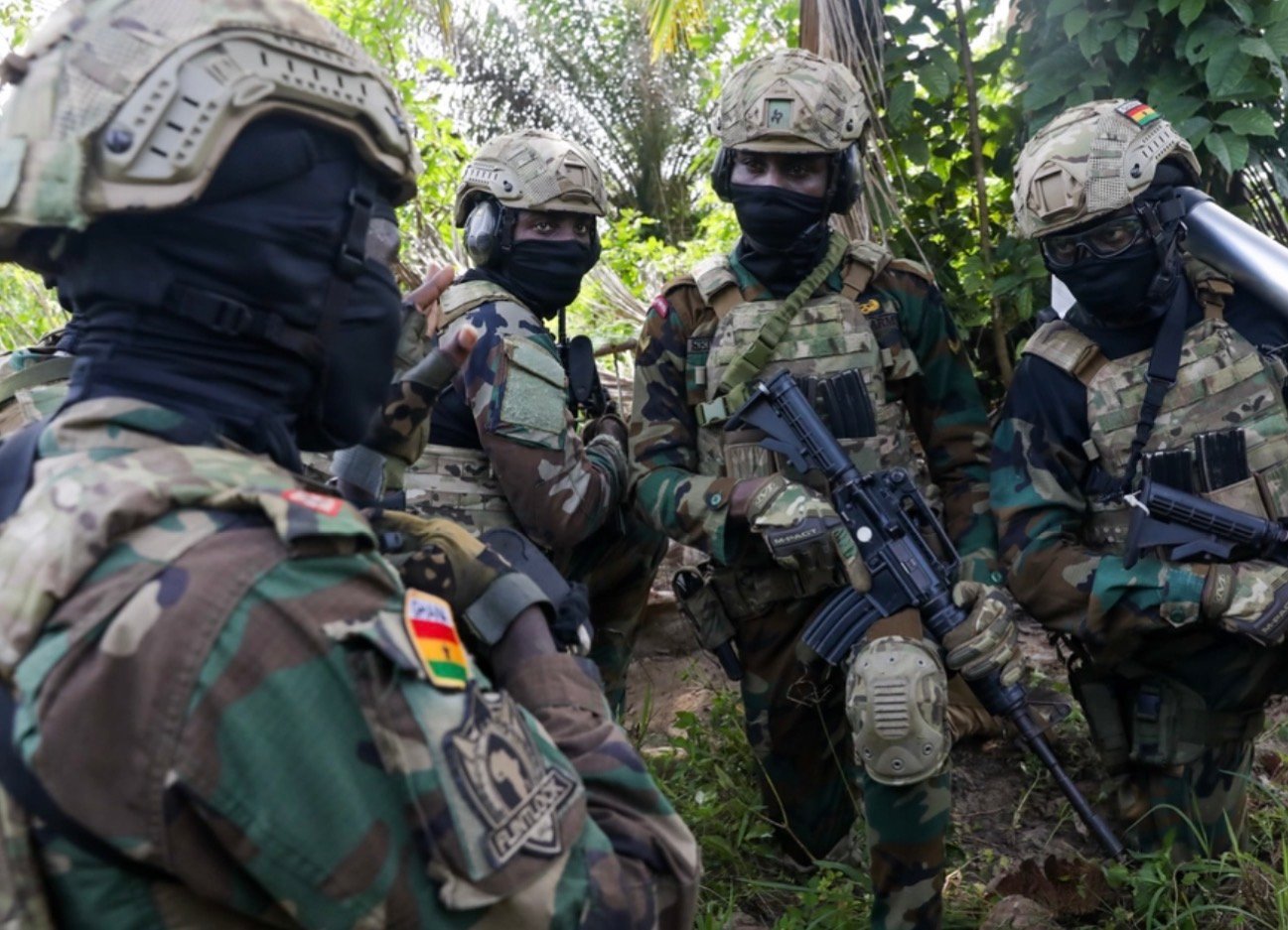
The Ghana Armed Forces issued a statement cautioning the public to desist from engaging the military during operations. That language is telling. The military is asking people to stop attacking them. Not warning that attacks will be met with overwhelming force. Not announcing that perpetrators will be prosecuted to the fullest extent. Asking.
That is the language of an institution that has not established dominance. That is the language of an institution negotiating for compliance rather than commanding it.
The Ghana Armed Forces wishes to caution all to desist from engaging the military or any other security service during its operations. — Ghana Armed Forces statement, April 27, 2026
What Would Actually Work
If the goal is to stop the killing in Bawku, mediation is not the answer. Mediation is what you do when both sides want peace but need help negotiating terms. Bawku's factions do not want peace. They want victory. Or at minimum, they want to prevent the other side from winning.
What would actually work requires addressing the structures that sustain violence:
First, depoliticize the chieftaincy. As long as every change in government brings the possibility of reversing chieftaincy decisions, both factions will continue fighting. The state must remove the chieftaincy question from political contestation. Either enforce the existing legal determination and penalize anyone who challenges it with violence, or create a power-sharing arrangement that removes winner-take-all stakes. But the current system, where violence can shift the political calculus, guarantees continued violence.
Second, cut off the arms supply. Weapons flow from Burkina Faso into Bawku because the border is porous and enforcement is weak. That requires coordination with Burkinabe authorities, increased border security, and genuine consequences for arms trafficking. Not just arrests. Prosecutions. Asset seizures. Disruption of the networks that profit from arming young men.
Third, create economic alternatives. Young men join armed factions because there is no viable path forward in the formal economy. Mediation does not create jobs. Military deployments do not create jobs. Economic development that offers wages competitive with what armed groups pay is what creates alternatives. That requires investment, infrastructure, and sustained commitment beyond a single electoral cycle.
Fourth, enforce consequences for violence consistently. Both sides accuse security forces of bias because enforcement is selective. Consistent, impartial enforcement that penalizes violence regardless of which faction commits it would signal that attacking convoys, killing civilians, and defying curfews carry real costs. Selective enforcement teaches the opposite lesson: that violence is acceptable if your faction has political protection.
None of this is easy. All of it requires political will that extends beyond the next election. All of it requires accepting that mediation is theater when the underlying incentives reward violence. And all of it requires admitting that 119 deaths during mediation is not progress. It is proof that the process failed.
Bawku has been burning for seventy years. Every government inherits the conflict, promises to resolve it, and leaves office with the bodies still piling up. Mediation processes are convened. Traditional authorities are consulted. Reports are delivered. And the violence continues.
One hundred nineteen people died while the Asantehene mediated. Three more died this week when a military convoy was ambushed. Seven attackers were willing to die attacking soldiers. The mediation did not stop the killing. It became the backdrop to it.
Peace processes that do not address the structures sustaining violence are not peace processes. They are performances that allow everyone involved to pretend they are doing something while the bodies accumulate. Bawku does not need another mediation report. It needs someone willing to admit mediation alone was never going to be enough.
Sources: MyJoyOnline reporting on April 27, 2026 convoy attack at Binduri, Ghana Armed Forces official statement on Bawku violence, Ghana News Agency coverage of President Mahama's statements on mediation casualties, Wikipedia comprehensive timeline of Bawku conflict (1957-2026), ACCORD analysis on armed violence in Bawku and terrorism linkages, Clingendael Institute policy note on conflict-related fatalities (2021-2024), The Africa Report security assessment of Bawku-Burkina Faso border, SOAS School of Law study on Bawku chieftaincy dispute, ModernGhana chronological review by Mubarik Adam Danzumah, Dubawa Ghana fact-check on recent violence and arms proliferation, CDS Africa roadmap analysis on ending Bawku violence, Vanguard News international coverage of convoy attack, academic research by Longi (2014) on colonial legacy and Bukari (2013) on Northern Ghana chieftaincy conflicts.